From Discarded Aloe Vera Plants to a ₹3.5 Crore Enterprise: The Inspiring Journey of Hrushikesh Jayasing Dhane
In entrepreneurship, opportunities don’t always arrive wrapped in success.
Sometimes, they lie abandoned on the roadside.
This is the extraordinary story of Hrushikesh Jayasing Dhane, a farmer from Padali village in Maharashtra’s drought-prone Satara district, who transformed what others considered worthless into a thriving business worth ₹3.5 crore annually.
At Uvanta, we believe India’s most remarkable entrepreneurs are often found far from corporate boardrooms. They are innovators who identify value where others see failure. Hrushikesh Dhane’s journey perfectly embodies this spirit.
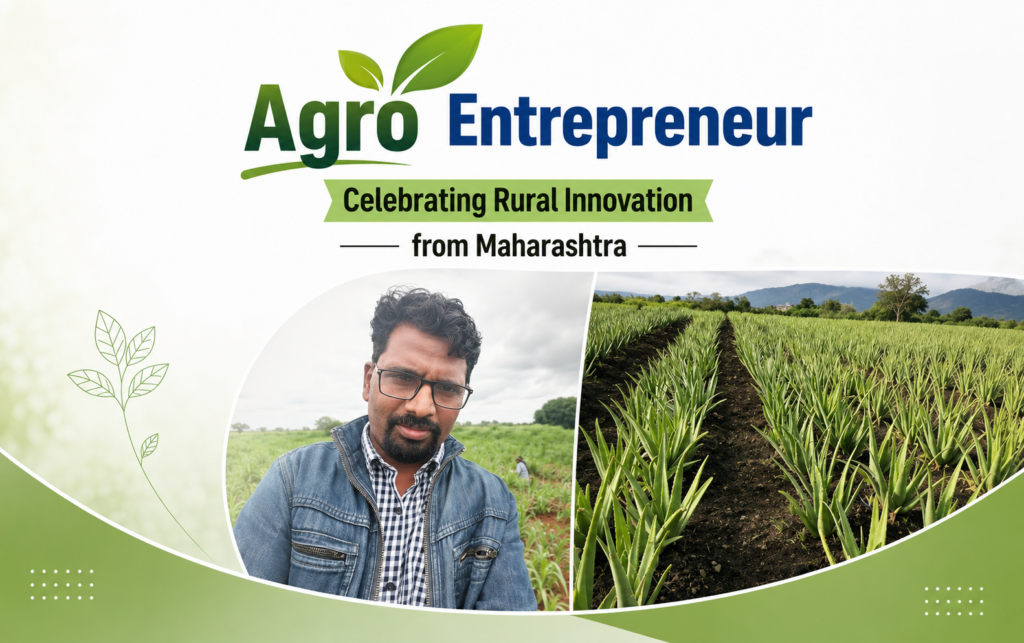
When Everyone Gave Up, He Began
Nearly two decades ago, many farmers in Satara were persuaded to cultivate aloe vera after being promised extraordinary returns. Attractive advertisements convinced them that aloe vera farming would make them wealthy.
Reality was very different.
When the crop was ready, the businessman behind the scheme disappeared, leaving hundreds of farmers without buyers. Disappointed and frustrated, many uprooted their aloe vera plants and threw them away.
Among those watching this unfold was Hrushikesh Dhane.
Unlike others, he didn’t see failure.
He saw possibility.
Instead of letting the plants go to waste, he collected nearly 4,000 discarded aloe vera plants and planted them on his own farm. Initially, he believed the crop could at least help protect his mango trees from termites.
That simple decision would eventually change his life.
A Farmer Who Chose Innovation Over Tradition
Coming from a farming family, Hrushikesh understood the challenges of agriculture in a drought-prone region.
Traditional crops offered uncertain returns because farming depended heavily on rainfall. Rather than continuing the same cycle, he decided to experiment.
As a horticulture graduate, he knew aloe vera possessed tremendous medicinal and agricultural value. Instead of selling raw leaves like everyone else, he began asking a different question:
“How can this plant create greater value?”
That question became the turning point in his entrepreneurial journey.
From Farming to Manufacturing
Initially, Hrushikesh experimented with aloe vera-based products such as soaps, shampoos, and juice. While these products generated interest, he soon realized the bigger opportunity lay elsewhere.
Using his horticultural knowledge, he developed innovative agricultural products including:
Natural pesticides
Herbal spreaders
Plant growth promoters
Organic crop protection solutions
These products solved real problems faced by farmers while making better use of aloe vera’s natural properties.
Instead of competing in commodity farming, Hrushikesh entered the business of value addition.
That changed everything.
Building a Multi-Crore Business
In 2013, Hrushikesh began commercial production of his aloe vera-based products.
What started with discarded plants gradually evolved into a professionally managed enterprise.
Today, his company manufactures approximately 8,000 litres of aloe vera-based products, supplying customers across the agriculture, personal care, and wellness sectors.
The business has grown to an annual turnover of nearly ₹3.5 crore, with healthy profit margins generated through value-added manufacturing rather than raw agricultural produce.
The Real Secret Behind His Success
Many people believe Hrushikesh became successful because he grew aloe vera.
The truth is different.
He became successful because he refused to sell aloe vera as a commodity.
Instead of earning a few rupees per kilogram by selling raw leaves, he converted the same crop into products that solved problems and created significantly higher value.
His story demonstrates one of the most powerful principles of entrepreneurship:
The biggest profits often come not from producing raw materials—but from transforming them.
Inspiring Rural Entrepreneurship
Hrushikesh’s journey has become an inspiration for farmers and rural entrepreneurs across Maharashtra.
He has shown that agriculture can become a profitable enterprise when combined with innovation, research, and value addition.
His business also highlights another important lesson:
Geography does not limit entrepreneurship.
Even from a drought-prone village in Satara, it is possible to build a nationally recognized business by thinking differently.
Lessons Every Entrepreneur Can Learn
The journey of Hrushikesh Dhane offers valuable lessons:
Opportunities often hide inside failures.
Innovation creates more value than production alone.
Agriculture becomes more profitable through processing and branding.
Knowledge combined with experimentation leads to sustainable success.
Small beginnings can build extraordinary businesses.
His journey reminds us that entrepreneurship is not about waiting for the perfect opportunity—it is about recognizing potential where everyone else sees problems.
From 4,000 discarded aloe vera plants to building a ₹3.5 crore enterprise, Hrushikesh has demonstrated that resilience, innovation, and value creation can transform even the harshest circumstances into lasting success.
As India moves toward sustainable agriculture and rural entrepreneurship, stories like his prove that the future of Indian business is not limited to cities—it is growing in our villages, one innovative idea at a time.
About The Author